Guide to Physical Game Events for Devs

Most of our writing so far has focused on the digital marketing aspects of getting the word out about your indiegame, but we haven’t discussed the opportunities that physical events bring with them. That’s because from a “sales” point of view, they’ll rarely get a good return on investment. But that doesn’t mean they’re not worth considering. So let’s first dive into WHY you’d want to attend a physical game event.
Note: this article is very difficult for me to write, there is SO much to say and so many tangents to go on. I’ll try to structure it to the best of my abilities, and I’ll revisit it often to make edits.
WHAT Are Physical Events Good For (and what not so much)?
Even events that offer you free booth space come with a very real cost of time, effort and often with travel & stay expenses. If your booth also comes with a price tag attached, it’s even more important to take a moment and ask yourself what you can even gain from the event. And that often depends on where you’re at with your project. Here are some reasons why you’d consider going to a physical event with your game:
You need (live) feedback on your demo/vertical slice
Events are great for watching people play your game, and you can often learn more from looking over their shoulder than sending people a digital demo alongside a form with questions. If you ASK players what they think, they might hold back to not insult you, or they’ll forget useful details. Some examples of valuable takeaways you can get from simply observing;
- if you see players skip your tutorial, maybe you should think of a more entertaining way to teach them about the controls?
- if all players go and look behind the waterfall at the start of your demo, and you see they are disappointed about not finding treasure there… you miiiiight want to live up to their expectations (also, this is just gamedev 101, people, put secrets behind your waterfalls!)
- if you see that everyone who plays is struggling with a certain jump, boss fight or other obstacle: make a note to look at this after the event.
You can, of course, ask players about their opinion after they’ve stopped playing the demo (avoid doing this WHILE they are playing, unless they reach out to you!) and we would even recommend this, but learn to read the room: not everyone has the free time to act as your QA, so respect that.
You need more wishlists
Hate to break it to you, but if this is the main reason for participating, it’ll usually end up disappointing. Unless the event also has a great online presence (Steam Event, showcases shared by big outlets…) then you’ll mostly be limited to the number of people playing your demo. And there is an easy math to be done here with the length of your demo times the number of devices you bring to play it on, and how long you’re on the show floor every day.
10 hour expo day (600 minutes)
------------------------------  x 2 demo stations   = 80 demo plays
15 min demo
If you take the above example, you can maybe expect 50-100 wishlists per demo day, assuming your demo is shorter or people who play it also tell their friends. But a lot of them will also not bother wishlisting unless you use it as the main Call To Action at the booth and ask everyone you see.
Tip: You can increase this number more if you also flyer near the booth, or have large QR codes people can scan. Combine it with free gifts or a chance to win something for an even better effect.
You need more sales
Your game has already released, and you’re hoping to sell some extra copies. This might be an even harsher reality check than the situation above, because you’re asking for a real commitment from players. Usually, bigger AAA studios will use this approach, but I don’t see it making sense for most indie games. It’ll depend greatly on what the total cost of you attending such a show with at least 2 people will be.
You want more eyes on the game
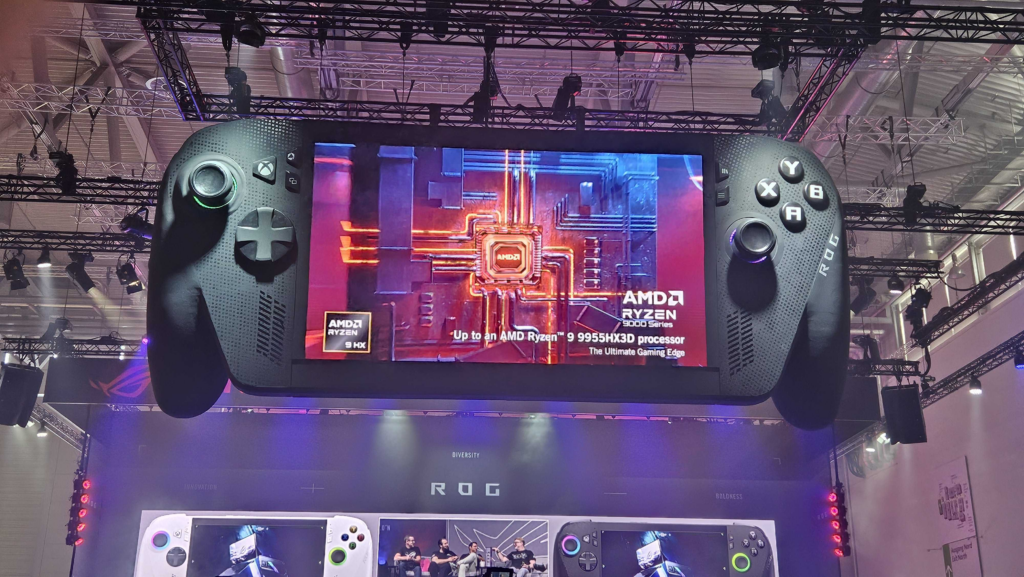
This is different from the wishlists above, but being at a physical event also brings other opportunities like meeting with the Press or creators, and they can then reach out to their audience with your game. Or the event might have an online showcase for games exhibiting in person, and that reaches far beyond the people you’ll meet. Take Gamescom, for example, which has a Steam event and an online showcase, or external partners like Future Games Show doing a “Live from Gamescom” recording. General awareness of “we’ve got a game that matters, and you should pay attention” is a possible outcome and one of the main reasons to consider such events.
Networking with other developers, publishers, etc
Networking is usually not the main goal for attending a physical event where you exhibit your game, but always one of the best added values. You’ll meet other developers with whom you can share stories and insights, you might meet a publisher who’s interested in your title, or you can meet service providers like PR agencies, localisation/translation companies, or porting companies who end up being valuable partners on the road to releasing your game. (psst: if you ever spot me IRL at an event, ask me for a Pirate PR coin!)

WHICH events should you consider attending?
This ties in heavily with the above reasons for going, but you’ll also need to research the events you’re attending and not just jump on any offer to exhibit your game. It’s time away from working on the game, which is a very real cost a lot of developers tend to forget about, and that’s without accounting for the upfront costs like a booth/entry fee, travel and stay, paying staff, promotional material and more.
Make sure you can TRUST the event to deliver!
I really wish this wasn’t an important item to start with, but some events out there are just not worth it or will bloat their numbers (scratch that, they ALL bloat their numbers!). It’s ok if they oversell the amount of visitors a bit, that’s to be expected, but it’s a disaster if hardly anyone shows up or if the general consensus us that that event sucked.
Huge events like Gamescom or GDC have a proven record, and you know they will attract a lot of people (they also dig deep into your pockets because of it), but if you’re not very familiar yet with an upcoming event and someone is reaching out to you, take a moment to do your research!
To The Moon Expo, which was just held in the UK (November 2025), was such a terrible recent example that it got compared to Dashcon, the Willie Wonka Experience and Fyrefest, all events that were infamous for disappointing visitors and exhibitors alike.
Check the organisers’ social media, website, their track record with previous events (LinkedIn!) and use good old common sense to smell the rat in the water. Talk to other developers about it, to ask if maybe they have more insights to share.
In short: do your due diligence and check beforehand if you can TRUST the event. Here is a very good write-up by Katie Goode that goes into more detail on the event and lists some other tips for indie game studios: https://mrsgame.dev/2025/11/why-due-diligence-matters-for-indie-game-studios/
Estimate the REACH the event will have
Where is it located? How many visitors are expected? What kind of online presence does the event have outside of the physical space? WHO is attending? If some big-name press or creators are going, perhaps meeting up with them in person makes it all worthwhile by itself.
WHEN is the event and HOW long is it?
Make sure the timing of the event matches your schedule. You might have to set it as a deadline for your (updated) demo, or you might need to prep a trailer for the marketing beat that happens alongside it. You could be better off ignoring certain events for the simple reason that their timing is off versus your personal timeline for releasing the game.
As for the duration, a longer event can be an upside, as you’ll get to meet more people and show your game to them, but again, it’s time away from working on your game, and it can be very tiring.
Ever exhibited at a booth in the Indie Game Arena at Gamescom? You’re looking at five very long days of standing on your feet and talking to people non-stop, over the loud, blasting speakers of the booths near you.
And that’s without taking into account the chances of you needing some recoup time after, or even the risk of getting sick from being in physical contact with so many other people.
HOW to prepare for a physical event
So you’ve decided to go. There is no stopping you now. What do you need to prep and keep in mind, and how do you make the most of the event? This is the main reason to read this article, and it’ll be a looooong list of tips and knowledge dumping, so strap in for a ride!
The Demo
Keep It Short, Stupid
As highlighted earlier in the article, it’s smart to keep your demo short enough that enough people can play it and have a natural stopping point. You don’t want one player sitting at your booth for an hour. Try to keep it to 10-15 minutes tops.
Note: this might mean you need to make a demo specifically for events that is different from the public one on Steam.
Make it Good
Make a dedicated demo build, don’t just drop people into the full game. Polish this experience to the best of your abilities, as it’s going to be the deciding factor if the player will ever convert into a payer. Make it easy for yourself to reset the demo to the starting screen.
Tip: When no one is actively playing, make the menu/title screen look enticing to play. If need be, run a trailer in the background with a giant “Press A to play” text box on top. Make people who walk by the booth interested in sitting down (or standing up) to play your demo.
Call to Actions matter
End the demo with a “thanks for playing!” and a Call to Action (CTA) to wishlist the game, buy the game, or even vote for it in case there is an award show tied to the event. Don’t be shy to talk to the players after they’ve finished the demo. A quick “did you like it?” and observing how open they are to discuss, is a good first step, then you can lead that into a vocal CTA where you (politely!) explain how they can help you.
Tip: Ask them WHO they are, especially at bigger shows. If they are press or creators, your CTA is not a wishlist/sale, but getting them interested in covering your game later. Prepare a flyer that links to the Press kit, or even give them a USB thumb drive with B-roll footage on it. The cost is surprisingly low for a potentially huge return!
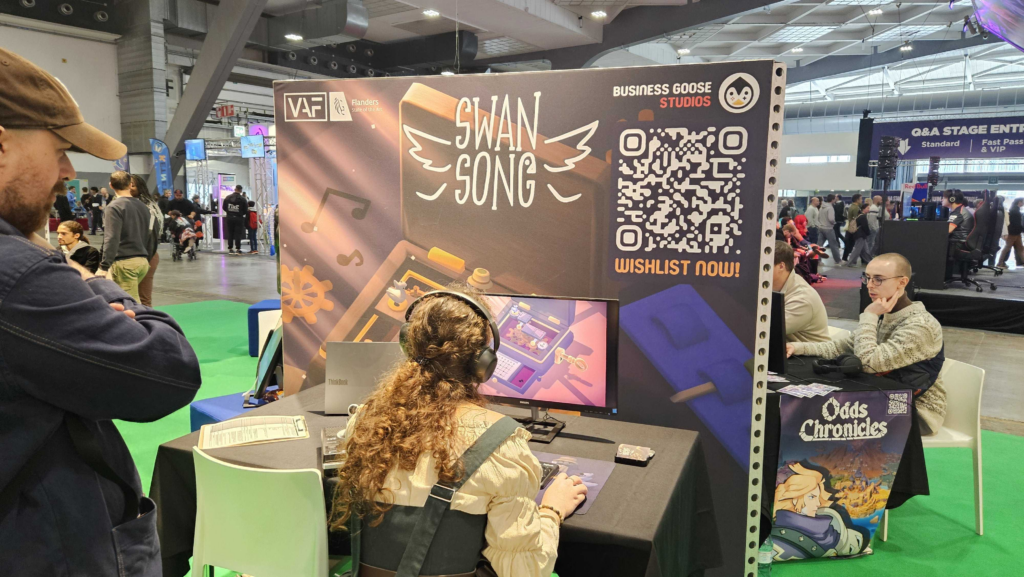
Pictured: Swan Song (wishlist now!)
The Booth
Make it pretty
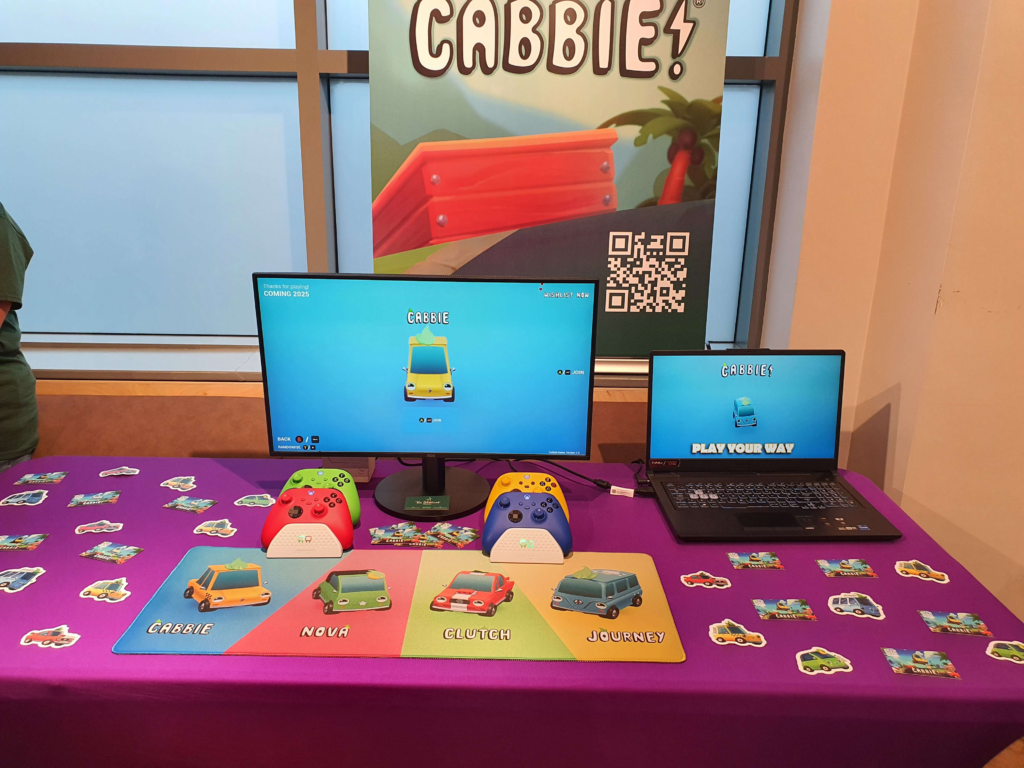
Good-looking booths attract more people. Bring a roll-up (they are surprisingly cheap and can be reused at several events), color-coded controllers and posters to hang up with your CTA on them. At a lot of events, you’ll be given a table, and the event organiser doesn’t do much to spruce up the appeal of your booth themselves. If you can dress it up with thematic props, go crazy! It really makes a difference and makes players feel welcome
Make it inviting
Bring an extra TV screen or monitor that either shows the gameplay of the person playing outwards, facing the hallway, or run a trailer on it. Some people are too shy to just grab a controller and start playing, they want to window-shop first. Your booth should feel like the display window of a shop: showing the passerby people what you have in store for them.
You can also flyer in the hallway or talk to people who keep watching from a distance and vocally invite them to play. If this is your first time doing this and you’re a bit of an introvert, don’t worry: it gets easier the more you do it.
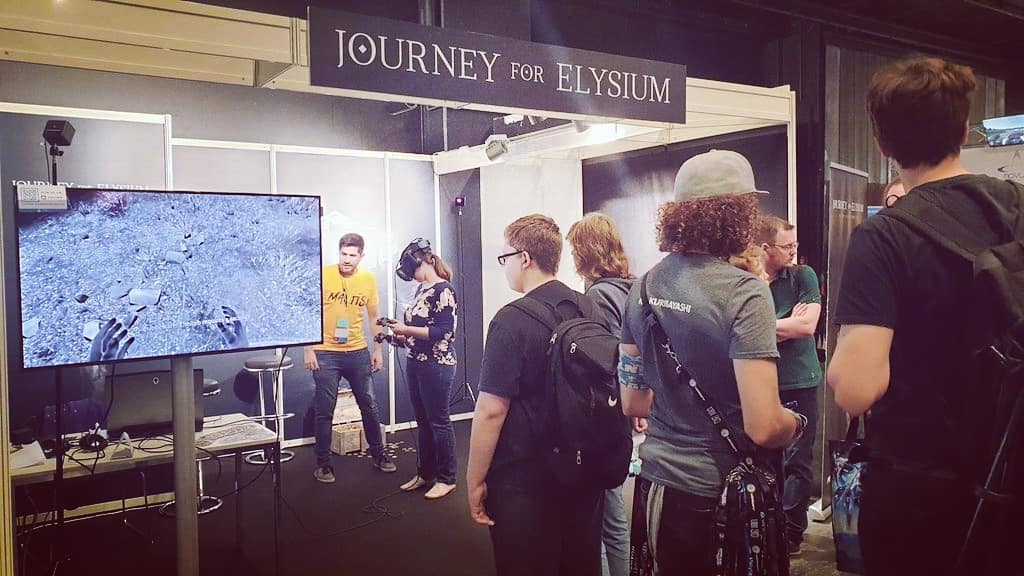
Personal anecdote: I was a shy introverted person when I first exhibited at GDC back in 2019. Half a year and about 3 events later, I was the one stopping players in the Gamescom halls and inviting them to come play Journey For Elysium and earn a golden coin for doing so. We had a queue forming in no time, and the booth looked super popular in our photos.
Bring goodies
It’s silly what people will do for some free swag. Bring stickers, magnets, coins, fidget toys, whatever you can think of and ideally something that fits your game. With Journey For Elysium we had golden coins, an idea I later repurposed for Pirate PR, and I now use coins as my business card.

Maybe also prepare some more expensive options like a tote bag with a USB key that has your press kit on it, merch like T-shirts or caps or wristbands etc. These aren’t just for everyone, but for press/creators or even when you talk to a potential publishing partner. Make it impossible to forget about your encounter.
Bring your own stuff
This is a recap of the above, but don’t always count on the event providing all the essentials for you. A quick checklist that may be wise:
- bring a tablecloth (that matches the game’s theme, if possible)
- extra controllers/batteries (also for your phone, an extra battery pack is no luxury)
- disinfecting gel for your hands, and baby wipes to clean your controllers
- personal hygiene stuff (deodorant, chewing gum)
- water, medicine, snacks (pack a survival kit, basically)
- an extension chord + splitter for your power supply (you often only get a single powerplug)
- printed Call To Action papers to hang on your booth walls.
- white paper, sharpies, tape for some last minute booth hacking
Don’t do it alone
Never exhibit at a booth alone; always bring at least one extra person to man the booth or look after your gear if you need time on the loo, or to just decompress outside for a while. It’ll also reduce your stress levels, knowing you can rely on someone else. Exhibiting at an event is tiring, and the human body/mind can only take so much. A shared load is half the load.
It also helps to have someone to talk to after the event, or to have at least one person with you to share a meal with when the day is behind you. Tip: use these events for their social opportunities as well, attend parties, network with like-minded developers, but keep enough fuel in the canister to face the next day!
Digital Prep
Have a Presskit at the ready
If you’re going to submit for an event, it’ll help a ton to have all the assets you need in an online location, available to your team, but also to just use as a single link to send to the organisers. If you’re wondering what needs to be in your press kit, we’ve got a useful checklist + template for you here:
Prep a form
Heck, you may even want multiple. For regular players, if you don’t have a Steam page up yet, instead of asking for a wishlist, ask them to subscribe to a newsletter. If you’re talking to press or a creator, use a different form to collect their name, email, outlet URL, social media links etc.
Don’t make it too long, and make it easy to access. You can put a tablet on your booth to have people fill in your form while talking to you at the booth, or you can put up a QR code sticker so they can visit it on their own devices or snap a pic of it for later.
Send a Press Release
You went through the effort of making a new demo. You probably also had to cook up a new trailer. Why let all that extra effort go to waste on just the physical event? Make your attendance at the show an entire marketing beat and send out a press release announcing everything that is new and exciting. That way, all your hard work reaches beyond the people you’ll meet in person.

Book appointments
You’re not the only one fighting for attention, so make sure you’ve got some appointments booked ahead of time, so press & creators know where to find you and at what time you’ll be available to answer their questions.
You can easily set up a Calendly or similar tool for this, but I would recommend Press Engine’s Event Management solution. It’s FREE and helps you manage your schedule and even has some built-in discovery

For events that are part of a larger industry event, like gamescom, GDC or PAX, press and creators will see their appointments with you as part of their larger event schedule, making it super easy for them to manage their schedule and it increases your appointment attendance.
I know this article full of checklists can feel like events are a lot of work, and that’s because they are. Don’t underestimate the amount of prepwork that goes into attending an expo, it’s a lot of hard work before, it’s tiring and will test your physical and mental limits during the event, and you’re also going to need some downtime to recover afterwards.
But don’t let this discourage you from attending. Prepping for an event creates a deadline that can boost your productivity, and you can walk away from it with reinvigorated passion to improve your game, not to mention new people in your network!
It’s something I also brought up in a recent interview/podcast with Your Game Is In Another Castle.
We hope that you’ve learned something new from this Treasure Trove post, and if you did, please consider sharing it through any of the options below and help spread the knowledge!

